Rainy Day Wedding Photos: How We Turn Florida Storms into Magic
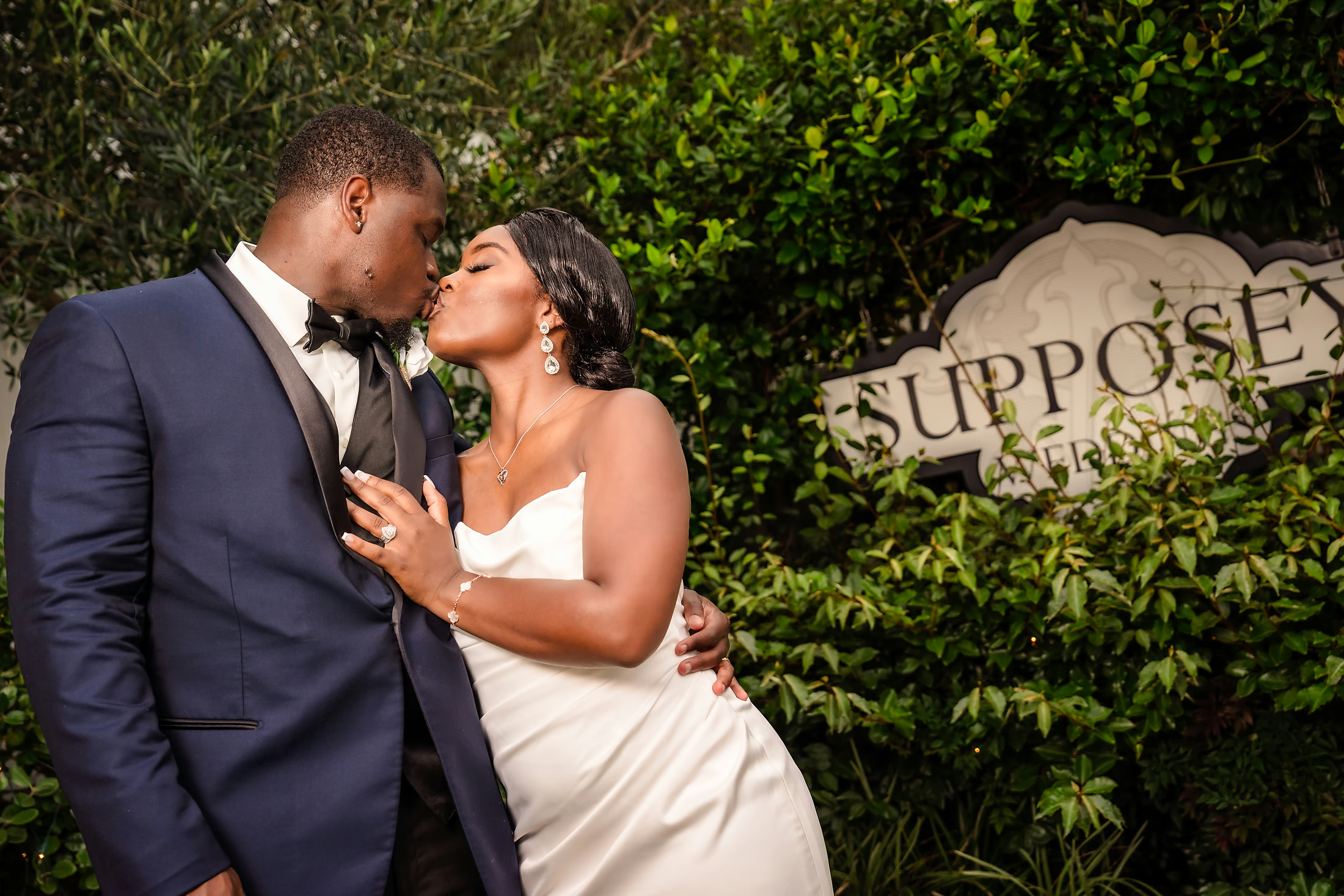
It’s the question almost every Florida couple asks at the rehearsal dinner the night before: “What if it rains?” The honest answer — coming from a Gulf Coast wedding photographer who has shot weddings in everything from pop-up squalls to full-on tropical storms — is that rain isn’t the disaster you think it is. Some of our favorite images in our archive came from days the bride spent the morning crying about the forecast. Here’s the photographer’s view of rainy day weddings, what we do, and how to plan so you actually enjoy it.
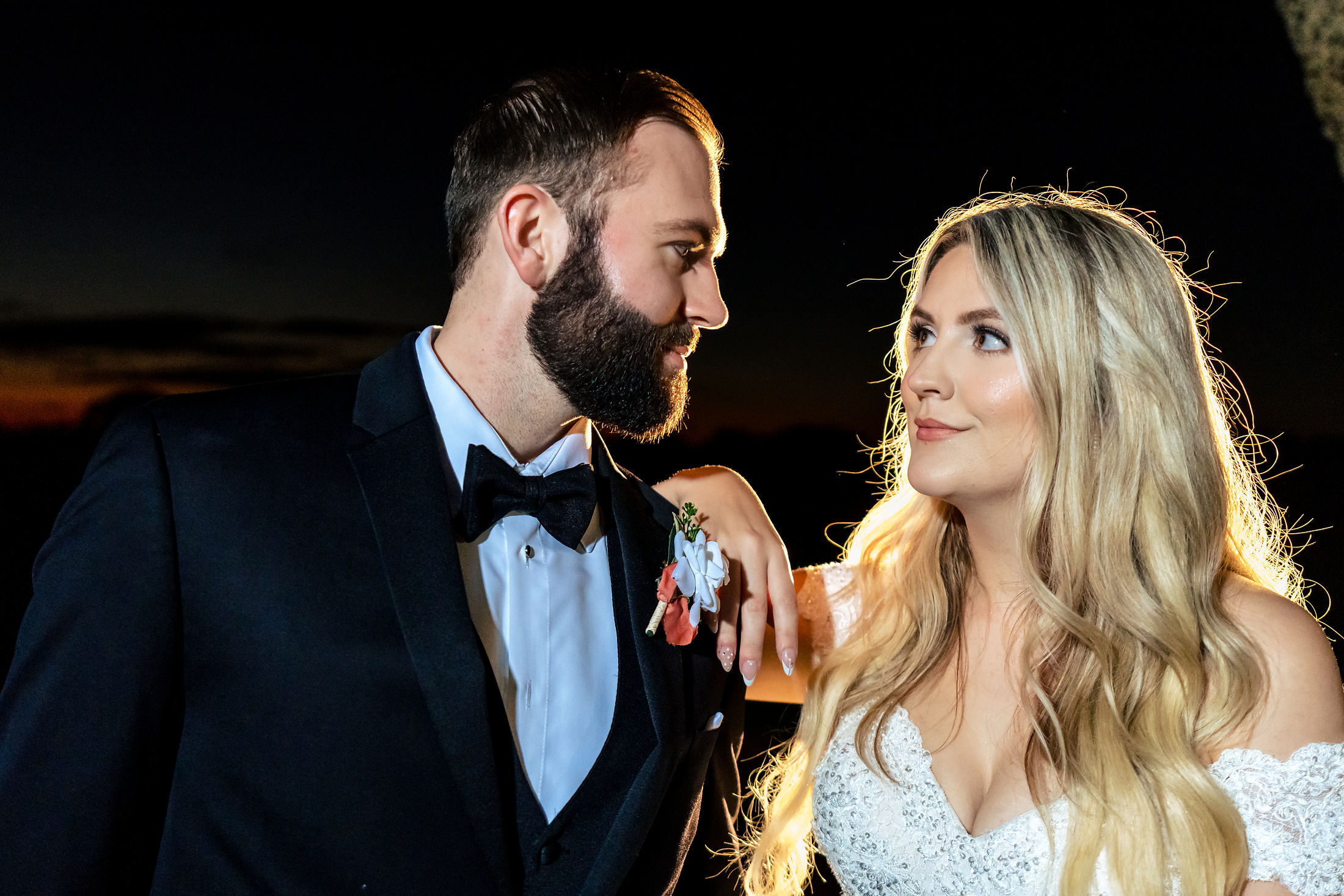
First: The Forecast Probably Isn’t What You Think
A “70% chance of rain” in Florida summer doesn’t mean it will rain 70% of the day. It means there’s a 70% chance some rain falls somewhere in the forecast area at some point. Most Gulf Coast summer storms are 20–40 minute pop-ups that move through, drop hard rain, and clear into a stunning post-storm sky. Knowing this changes how you read the forecast.
What we actually care about: the radar 6 hours out. Your photographer (and any halfway-good planner) will be watching it from the morning of, and we’ll adjust the timeline in real-time. Often we’ll shoot portraits earlier or later than planned to slot around a band of weather. We’ve moved a ceremony from 6:30 to 5:45 to beat an incoming line — that’s the kind of call we’re making.
The Three Plans Every Outdoor Wedding Needs
- Plan A: Your original outdoor plan. Plays as designed.
- Plan B: A flexible “delay 30–60 minutes and shoot in the window” option. Most rain days actually run on Plan B.
- Plan C: Full indoor pivot. Activated only if Plan B isn’t possible. This is the plan you must walk in person before the wedding day.
The mistake we see most often is a Plan C that exists on paper but nobody has actually looked at. Walk it. Stand in the rain backup room. Imagine your ceremony there. If you’d be miserable, choose a different venue or rent a tent.
What Rainy Day Photos Actually Look Like
Three quietly true things about rain photography:
- Overcast light is gorgeous. A solid cloud layer is essentially the world’s biggest softbox. Skin tones go from “harsh midday sun” to “wedding-magazine soft” in a single second.
- Wet sand and wet pavement reflect light. They mirror back the sky and create natural ambient bounce. After-rain images often have a glow that dry images don’t.
- Storm skies are dramatic. A blown-out blue sky behind a beach ceremony is forgettable. A moody, layered cloud sky is the kind of image that wins competitions.